Contents 11 sections
Most of the wait is the permit for the new home, and it comes before the house comes down. In 2026 that permit took a median of 142 days for a new house and 130 for a duplex. Half of teardowns then get the demolition permit the same day, and 3 in 4 within a month. Demolition often takes a few weeks. Building takes a year or more after that.
What we found
-
142 days
Median wait for a new-house permit in Vancouver in 2026, the longest step before a house comes down. A duplex permit took 130 days.
-
50%
Of Vancouver house teardowns get both permits on the same day: the demolition permit and the permit for the new home. 2,321 of 4,668 we could match, 2017 to October 2, 2026.
-
3 in 4
Teardowns where the new-home permit came within a month of the demolition permit, either way.
-
1 in 100
Vancouver lots that waited more than a year between the demolition permit and the new-home permit (49 of 4,668).
-
~30
Lots with no building on the 2026 roll, out of 903 houses torn down from 2017 to October 2024 that we couldn’t match to a new home.
-
7 days
Median gap for a multiplex, against 0 days for a new house and 1 day for a duplex.
- 1Design and lot check
Depends on the project - 2New-home permit
142 days for a house, 130 for a duplex - 3Demolition permit
Same day for half of teardowns - 4Demolition
Testing, cleanup and recycling, often a few weeks - 5Build
A year or more, by design and season
T-City analysis of City of Vancouver open data: issued building permits to October 2, 2026. Permit times: median days from application to issue, new-building permits issued in 2026. Demolition and build lengths are typical ranges, not City data
How long do the permits take?
- New-home permits
T-City analysis of City of Vancouver open data: issued building permits to October 2, 2026. Half of house demolition permits were issued the same day as the new-home permit
A multiplex permit takes longer, about six months. See multiplex permits by the numbers.
Does the lot sit empty while you wait?
Usually not. Most owners keep the house standing until the new-home permit is ready. That matters for tax: an empty house waiting on a permit can owe the Empty Homes Tax. See what a permit wait costs. The permit dates show two ways it goes:
Most lots: 3 in 4 Both permits within a month
- 1New-home permit issued
- 2Demolition permit, same day or soon after
- 3House comes down
- 4New home is built
A few lots: 1 in 17 Demolition first, by 3 months or more
- 1Demolition permit issued
- 2House comes down
- 3Lot waits for a new-home permit
- 4New home is built
T-City analysis of City of Vancouver open data: house demolition permits January 2017 to October 2, 2026, matched to the nearest low-density new-building permit at the same address
How long between the two permits?
- Same day
T-City analysis of City of Vancouver open data: issued building permits to October 2, 2026. Matched by street and house number; laneway house permits left out
Most of the gap, when there is one, is a few weeks. The demolition permit usually comes once the new home’s permit is ready. So the old house stays up while the City reviews the new one.
So why do some lots look empty for months?
Because permits aren’t the whole story. After both permits are issued, a lot still goes through steps the open data doesn’t show:
- Hazardous materials removal before the house comes down
- Demolition and recycling, often a few weeks
- Excavation and foundations, when the lot looks like a hole for a month or two
- Waiting on a crew, a loan draw or a utility hookup
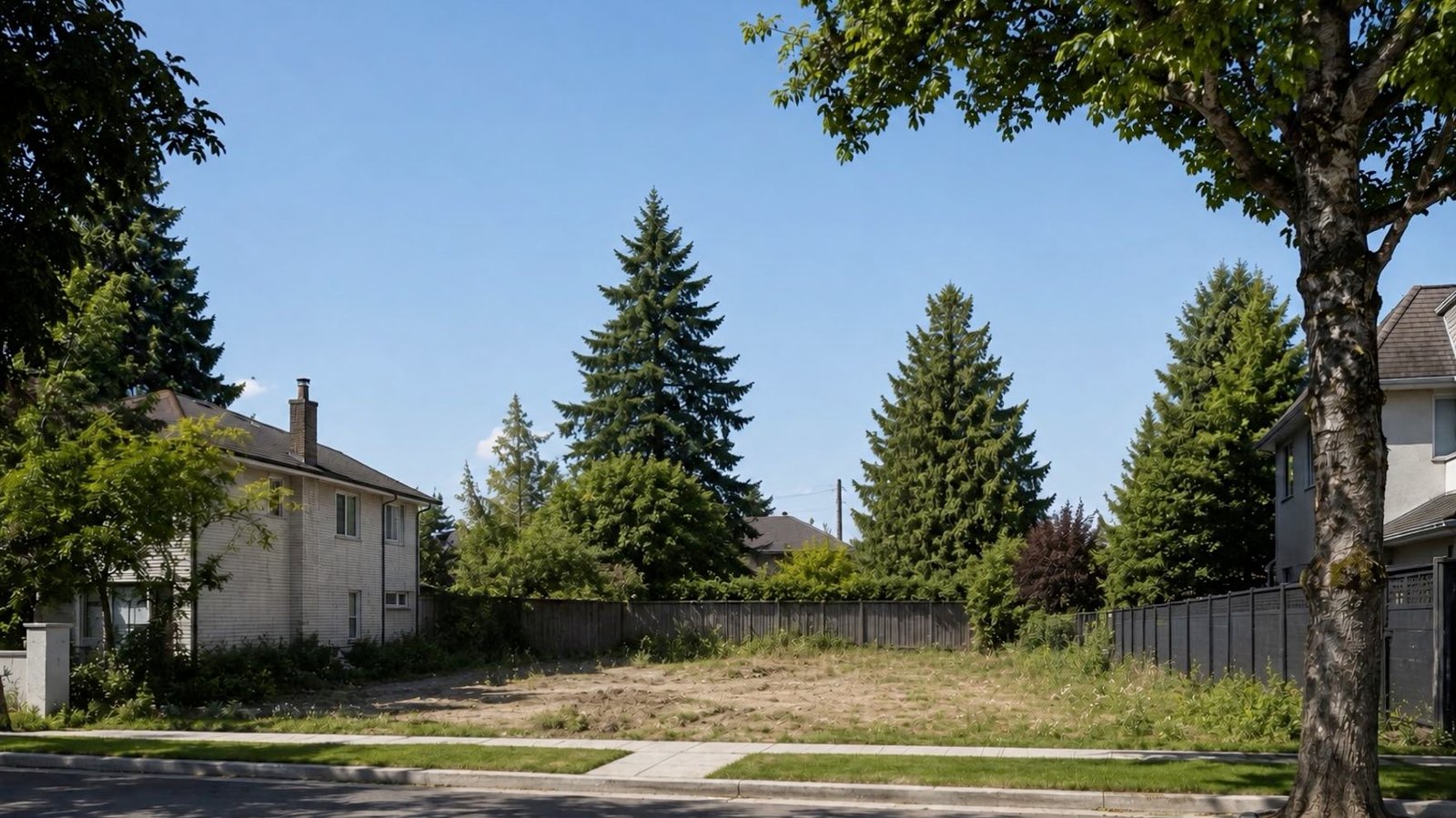
An empty-looking lot with a fence around it is usually a site between demolition and framing, not a stalled project. See how long it takes to build a duplex for the full timeline.
What happened to the lots we couldn’t match?
We couldn’t match 1,317 teardowns to a new home at the same address. For the 903 that are more than two years old, we checked what the 2026 assessment roll shows:
- No building on the roll
T-City analysis of City of Vancouver open data: issued building permits and the 2026 property tax report (BC Assessment, July 1, 2025). “Merged”: the address is no longer on the roll. “No building”: improvements assessed at $20,000 or less
Most weren’t empty at all. Many were merged into a bigger site, like a townhouse or apartment project. Others are now strata homes with new addresses. About 30 lots had no building assessed on the July 2025 roll.
Is the gap getting longer?
A little. Through 2024, more than half of teardowns got both permits the same day or with the new-home permit first. In 2026 it’s about a third, and the median gap has gone from 0 days to 7. Our read: multiplexes are a bigger share of teardowns now, and their permits are more often issued a week or two apart.
How we counted
We used the City of Vancouver’s open data: every issued building permit to October 2, 2026, and the property tax report.
We took every demolition permit for a house from January 2017 to October 2, 2026. There were 5,985. For each, we looked for the closest new-home permit at the same address, or a few doors away, within four years. We matched 4,668. A laneway house doesn’t count as a new home here.
For the rest, we checked the address on the 2026 assessment roll, which shows each property as of July 1, 2025.
- Permit dates aren’t work dates. We measure the gap between permits, not between the house coming down and building starting
- Address matching misses some lots, such as corner lots that change their street address. Those show up as unmatched, not as empty
- “No building on the roll” means improvements assessed at $20,000 or less. We didn’t visit the sites
What it means if you’re planning a teardown
- Keep the house until your new permit is close. It can stay rented, and a standing house needs less site security
- Book demolition and hazardous-materials testing early, so they start the week your permits are issued
- Plan the whole sequence before you apply. Our process lines up permits, demolition and construction so the lot sits empty for weeks, not months
Sources
Every outside figure traces to one of these pages, all opened on November 2, 2026. T-City’s own analysis uses the City of Vancouver open datasets. Rates and fee schedules change, so we recheck them for your lot during feasibility.